
Hành Trình Học Tiếng Anh Của Tôi:
Từ Mất Gốc Đến Giáo Viên Tiếng Anh Onlin
e

Xin chào, mình là Ngoc Lee


Nếu bạn đang cảm thấy tiếng Anh quá khó, không biết bắt đầu từ đâu, hoặc đã từng bỏ cuộc nhiều lần, thì câu chuyện của mình có thể sẽ tiếp thêm cho bạn một chút động lực.

Tôi Đã Từng Sợ Tiếng Anh

Ngày còn đi học, tiếng Anh không phải là môn học yêu thích của mình. Mình học ngữ pháp, làm bài tập nhưng lại không thể nghe hoặc nói được. Mỗi khi gặp người nước ngoài, mình thường rất ngại và thiếu tự tin.
Có những lúc mình nghĩ rằng có lẽ mình không có năng khiếu học ngoại ngữ.
Nhưng rồi mình nhận ra một điều:
Không phải mình không thể học tiếng Anh, mà là mình chưa tìm được cách học phù hợp.

Bắt Đầu Lại Từ Con Số 0

Mình quyết định học lại tiếng Anh một cách nghiêm túc.
Thay vì cố gắng học quá nhiều thứ cùng lúc, mình tập trung vào những điều cơ bản:
Học từ vựng theo chủ đề
Luyện phát âm mỗi ngày
Nghe những đoạn hội thoại ngắn
Tập nói những câu đơn giản trong cuộc sống hàng ngày
Mỗi ngày chỉ cần tiến bộ một chút.
Có ngày mình học được 5 từ mới.
Có ngày chỉ nghe được một đoạn audio ngắn.
Nhưng mình không bỏ cuộc.

Những Khó Khăn Trên Hành Trình

Học tiếng Anh không phải lúc nào cũng dễ dàng.
Mình từng:
Quên từ vựng rất nhanh
Nghe không hiểu người bản xứ nói gì
Phát âm sai nhiều lần
Thiếu tự tin khi giao tiếp
Tuy nhiên, chính những khó khăn đó đã giúp mình hiểu được cảm giác của người học tiếng Anh.
Và cũng nhờ vậy mà sau này khi trở thành giáo viên, mình luôn cố gắng thiết kế bài học thật đơn giản, dễ hiểu và gần gũi với người học.

Trở Thành Giáo Viên Tiếng Anh

Sau nhiều năm học tập và rèn luyện, mình bắt đầu giảng dạy tiếng Anh online.
Điều mình yêu thích nhất là được đồng hành cùng học viên trên hành trình chinh phục tiếng Anh.
Mỗi khi thấy học viên:
Tự tin giới thiệu bản thân bằng tiếng Anh
Hoàn thành một bài nghe khó
Giao tiếp tự nhiên hơn mỗi ngày
mình lại nhớ đến chính mình của nhiều năm trước.

Vì Sao Tôi Xây Dựng Ngoc Lee's English?

Mình tin rằng:
Tiếng Anh không chỉ dành cho những người có năng khiếu.
Bất kỳ ai cũng có thể học được nếu có:
Lộ trình phù hợp
Tài liệu dễ hiểu
Sự kiên trì mỗi ngày
Đó là lý do mình xây dựng các khóa học và tài liệu tại Ngoc Lee's English để giúp người học có thể tiếp cận tiếng Anh một cách đơn giản và hiệu quả hơn.

Chúc bạn luôn giữ được động lực và niềm vui trên hành trình học tiếng Anh!
Ngoc Lee
English Teacher & Course Creator 🌱

5 Easy Ways to Improve Your English Speaking Every Day

May 28 / Ngoc Lee

Key Takeaways

If your English speaking feels stuck, it is usually not because you need a longer study session. It is because you are not getting enough short, real speaking reps during the week, even if they are only 2 to 5 minutes at a time

  • Small daily speaking habits beat long weekly study sessions for real progress

  • You can build confidence by using simple sentence patterns and repeatable practice

  • The right vocabulary and speaking drills help you sound clearer and more natural

If you do one thing, speak out loud every day using the same two or three sentence patterns until they feel automatic. That works best when your practice is simple and consistent, but it fails when you try to practice perfectly and quit after a few days

Turn daily moments into speaking practice without feeling shy
Also, you do not need a class or a partner to speak more. If you have 10 minutes between classes, on a walk, or while waiting for food, you can practice out loud in a way that feels private and low-pressure.

A simple benchmark helps you stay consistent: 10 minutes a day for 14 days is 140 minutes of speaking. That is often more speaking time than many learners get in a full month, and it adds up fast even if each session is short.

Here are 5 daily habits you can start today (each takes about 2 to 10 minutes):

  • One-sentence voice warm-up (2 minutes): say your name, where you are, and what you are doing right now, then repeat it 3 times with clearer pronunciation

  • Mirror mini-talk (3 minutes): look at yourself and explain one small thing, like your plan for the next hour, using 5 simple sentences

  • Object narration (2 minutes): pick one thing you can see (laptop, coffee, bus stop) and describe it with 6 to 8 adjectives and short phrases

  • Shadow a short clip (5 minutes): play 20 to 30 seconds of audio, repeat each line, then repeat again faster, focusing on rhythm not perfection

  • Send a voice note to yourself (2 minutes): record a 30-second summary of your day, then listen once and re-record with 2 vocabulary upgrades

If you do one thing, do the voice note habit for 14 days, because it shows steady progress you can hear. Here’s the catch: these habits work best when you keep sentences short; they fail when you try to sound perfect and stop mid-sentence, so keep going and fix it on the second recording.

Speak in short, repeatable sentence patterns

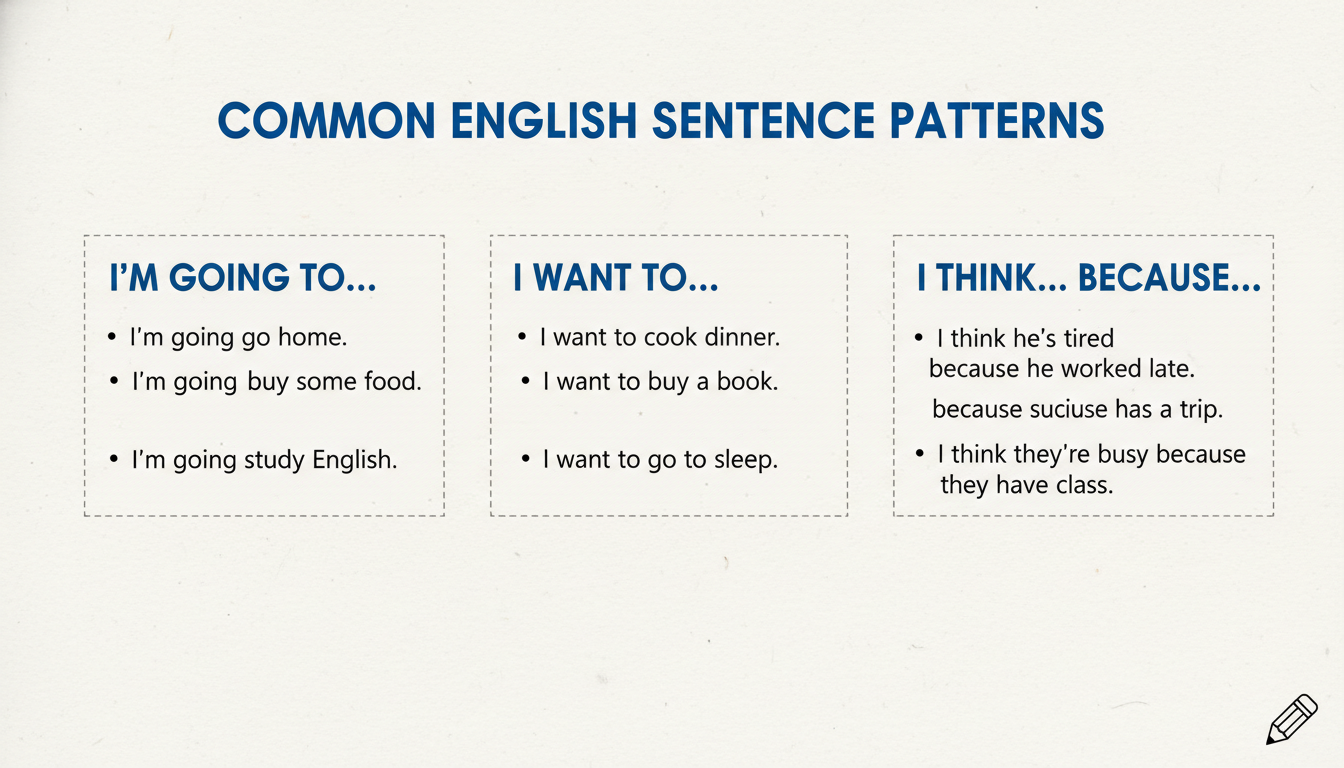
Next, stop trying to build new sentences from scratch every time you speak. Pick 3 short patterns and reuse them daily so your mouth gets used to the rhythm of English.

Use these go-to patterns:

  • I’m going to…

  • I want to…

  • I think… because…

In practice, keep a mini vocabulary list and plug words into the same patterns. If you do one thing, do this: say 3 sentences out loud each morning and 3 at night, using the same patterns.

Mini vocabulary to plug in:

  • Verbs: go, buy, study, cook

  • Feelings: tired, excited, busy, nervous

Examples you can copy today:

  • I’m going to study after dinner

  • I want to buy a snack

  • I think I’m nervous because I have a test

Upgrade your daily vocabulary with small topic sets
Also, you do not need a huge word list to sound more natural. Pick one small topic set you really use and repeat it for a week, so the words show up in real conversations instead of staying on a flashcard.

If you do one thing, do this: choose a topic you’ll definitely talk about in the next 24 hours, then reuse the same 8 to 12 words in 3 short sentences during the day.

Try one daily topic set and recycle it:

  • Food (ordering lunch, cooking, describing taste)

  • School (classes, homework, deadlines)

  • Work (meetings, tasks, schedules)

  • Hobbies (sports, games, music)

  • Shopping (prices, size, quality)

  • Family (plans, chores, events)

Here’s the catch: vocabulary practice fails when you pick random words you never say. It works best when your topic matches your real day, like describing your lunch to a friend or explaining a busy schedule to a classmate.

Use easy pairs to upgrade common words without changing your whole sentence. For example, keep the sentence pattern the same and swap one word:

  • delicious vs tasty

  • cheap vs affordable

  • busy vs packed

  • happy vs glad

Common mistake: trying to use all the new words at once and freezing. Fix it by choosing one pair per day and using it 5 times, like a student saying “My schedule is packed today” before class, or a parent saying “This is affordable” while shopping online.

Practice speaking every day with low-pressure methods

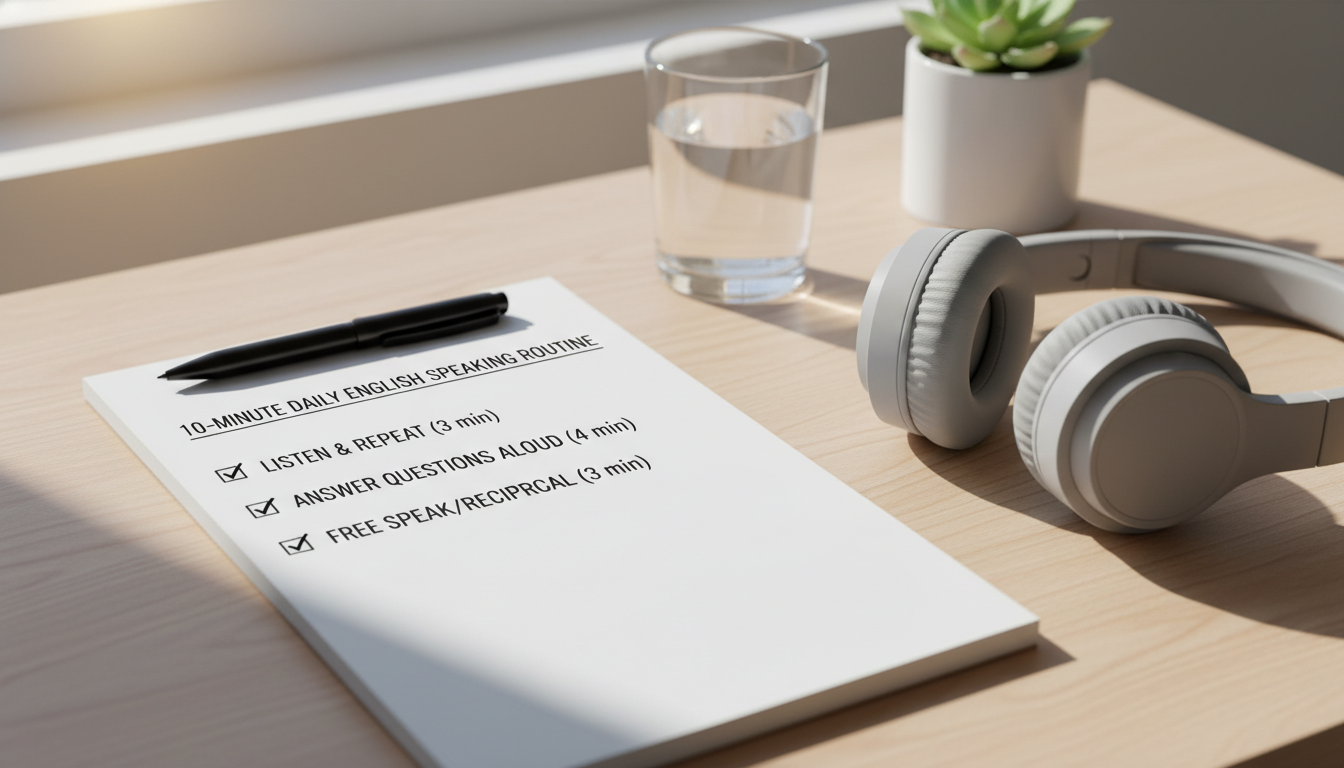
Next, make speaking practice so small that it feels hard to skip. A 10-minute routine done 5 days a week often beats a single long session, because your mouth and ears stay used to English.

If you do one thing, copy this quick pattern:

  • Shadow for 2 minutes: play a short clip and speak at the same time (shadowing means you repeat along with the audio)

  • Retell for 1 minute: pause the audio and explain the same idea in your own words, even if it is simple

  • Repeat once with the same clip, focusing on clearer sounds and smoother pauses

Also, try “speak-first journaling” when you feel stuck or shy. You speak first so you do not overthink grammar, then you write to notice gaps.

  • Say 5 sentences aloud about something real (your class schedule, what you ate, what you are studying)

  • Write the same 5 sentences and circle any word you had to switch to your first language

  • Pick 1 circled word to look up, then say the 5 sentences again

Here’s the catch: these methods work best when the content is easy and repeatable, like a 30 to 60 second clip. They can fail when you choose a fast movie scene, so start slower and only speed up after 3 to 4 days of practice.

Closing remarks

Also, keep this in mind: “Consistency beats intensity.” Ten minutes today often does more than one long session you never repeat.

Pick one of the five ways from this post and schedule it like a real appointment. What exact time will you practice for 10 minutes today, and what will you say in that time, for example three sentences about your day or a short role-play at the store?

Learn with Ngoc Lee’s English

Created with